
Wondering how to improve Google ranking for your small business? The fastest path combines a complete Google Business Profile, real keyword research, genuinely helpful content, and a technically healthy site, all measured over several weeks rather than days. Many Burlington and Southern Ontario business owners know they need to rank higher but feel stuck on where to begin, especially when competitors seem to show up first every time.
That frustration usually comes down to one thing: Google’s ranking system looks at dozens of signals, and no single fix solves it alone. The good news is that you do not need to guess. This guide breaks the process into 9 practical steps, starting with your Google Business Profile and ending with how to measure whether your work is paying off.
We put this list together at UPMYSITE, a Burlington-based digital marketing studio, because we work through these exact steps with local clients every week. Keep reading, and you will have a clear plan you can start using today.
Key Takeaways
Local ranking depends on three things: relevance, distance, and prominence.
A complete, verified Google Business Profile is often the fastest way to boost local visibility.
Keyword research and search intent should guide every piece of content you publish.
Technical health, including page speed and mobile usability, supports every other ranking effort.
Results take weeks to months to show, so track progress and adjust as you go.
Table of Contents
- What Determines Your Google Ranking?
- 9 Steps to Improve Your Google Ranking
- Why Partner With a Local SEO Team?
- The Takeaway
- Frequently Asked Questions
What Determines Your Google Ranking?
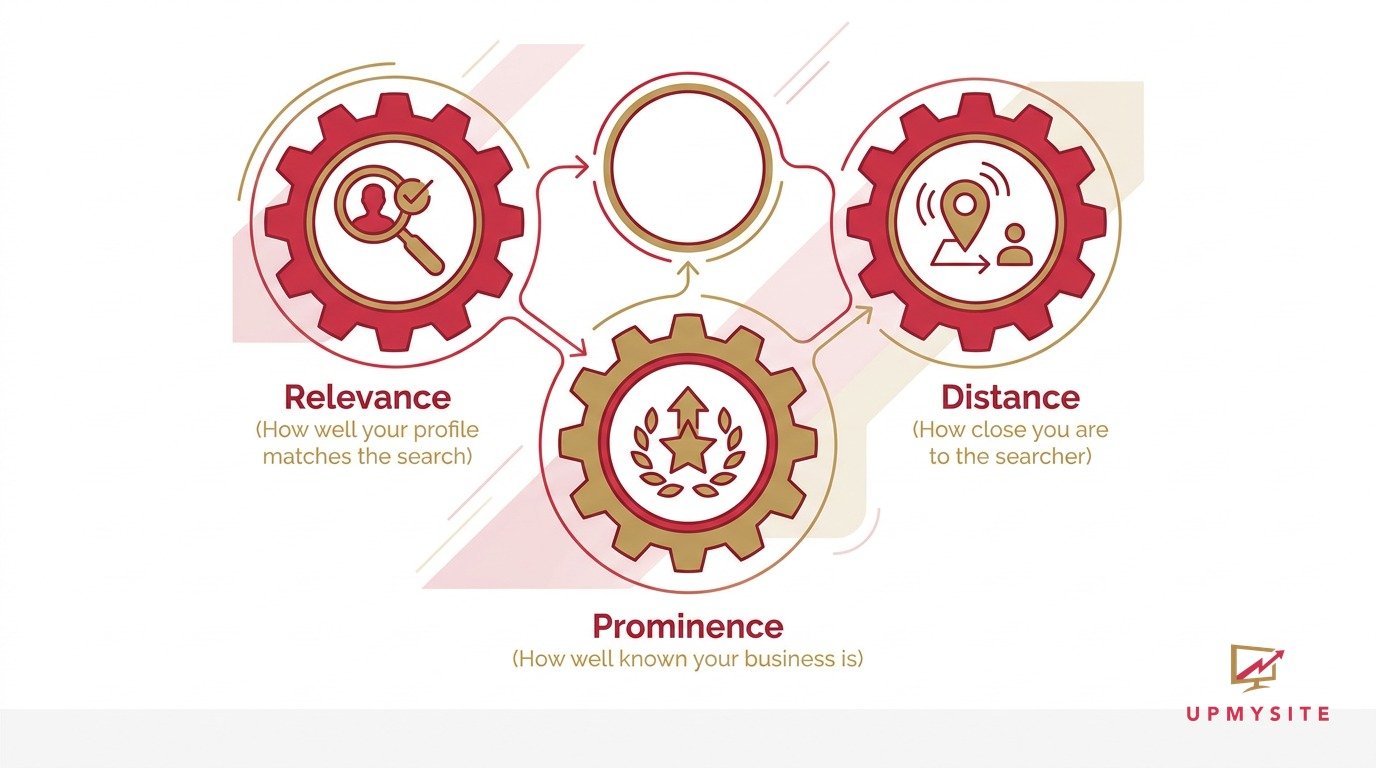
Google ranking for local businesses comes down to three main factors, relevance, distance, and prominence, working together to decide which results appear first. Relevance measures how closely your business profile and website match what someone typed into the search bar, which is why detailed, accurate information matters so much. Distance reflects how close your business is to the person searching, something you cannot control directly but can account for with location-specific content.
Prominence reflects how well-known your business is, shaped by factors like the number of reviews you have and how many other sites link back to you. Google keeps the exact weighting of its algorithm private, so chasing shortcuts rarely pays off. The smarter move is building steady habits across all three factors instead of hunting for a single trick.
9 Steps to Improve Your Google Ranking
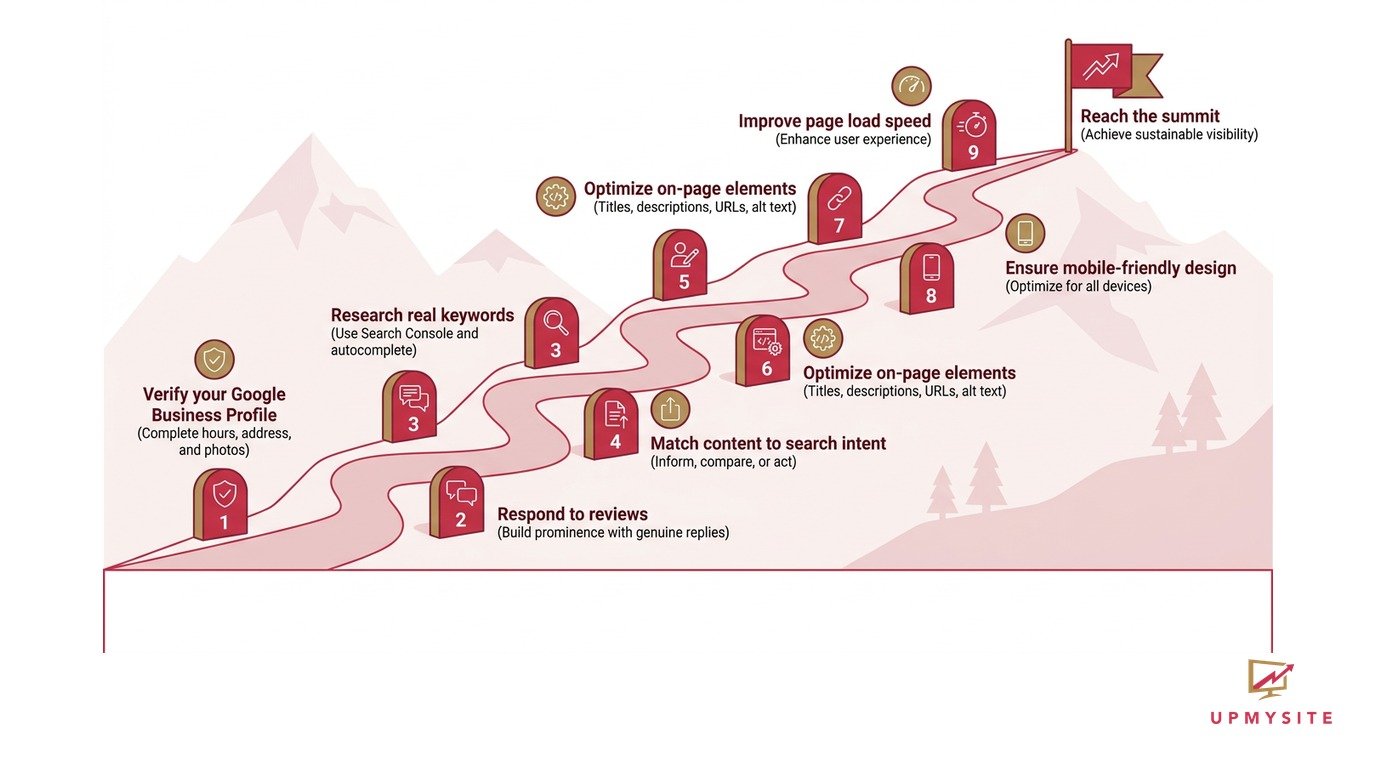
Improving your Google ranking is less about one big fix and more about stacking small, consistent improvements across your online presence. Each step below builds on the last, starting with the basics of local visibility and working through content, technical health, and measurement. Together, they form a practical checklist any small business owner can work through, whether on their own or with support.
Verify and Complete Your Google Business Profile. Confirm your business through Google, then fill in accurate hours, address, category, and attributes like parking or Wi-Fi. Add real photos and videos so customers get a feel for your business before they even arrive. UPMYSITE’s local SEO work across Burlington, Oakville, Milton, Hamilton, and the wider Greater Toronto Area starts right here, because an incomplete profile is one of the most common reasons local businesses get overlooked.
Respond to Reviews and Build Prominence. Reply to every review, good or bad, since thoughtful responses show customers you value their feedback. More positive reviews, paired with genuine replies, feed directly into Google’s prominence signal and help your listing stand out against nearby competitors.
Do Keyword Research That Reflects Real Searches. Open Google Search Console and sort by impressions to see which terms people already find you for, then check clicks to spot missed opportunities. Type your main topics into Google and study the autocomplete suggestions and related searches at the bottom of the page for extra ideas worth targeting.
Match Content to Search Intent. Searchers generally want one of four things: information (“how to fix a leaky tap”), a specific site (“UPMYSITE Burlington”), comparisons before buying (“best plumbers near me”), or to act right away (“book a plumber today”). Write each page with one of these intents in mind so visitors find exactly what they came for.
Publish Helpful, Original, Up-To-Date Content. Write for people first, answer real customer questions, and keep older pages current rather than letting them go stale. The team’s content marketing work focuses on clear structure and honest, useful information, which tends to earn more trust than content written purely to chase rankings.
Optimize On-Page Elements. Give each web design and development a unique title tag and meta description, use descriptive URLs instead of random strings, add internal links with clear anchor text, and write short alt text for every image.
Strengthen Technical SEO and Site Speed. Test your site with tools like PageSpeed Insights and the Mobile-Friendly Test, since slow or clunky mobile pages drive visitors away fast. The platform’s website maintenance service handles these technical audits and fixes on an ongoing basis, so small issues get caught before they affect rankings.
Build Links and Promote Your Site. earn backlinks naturally through useful content, community involvement, and word of mouth, since links remain one of the clearest trust signals Google uses. Add your website to business cards, letterhead, and local directories to widen your reach offline too.
Set Realistic Timelines and Measure Progress. Some changes show up within weeks, others take a few months, so give your efforts time before judging results. analytics tracking setup through Google Search Console, and consider monthly reporting through tools like GA4 and SEMrush to see exactly what is working.
Why Partner With a Local SEO Team?
Partnering with a local SEO team makes sense once you realize that web design, content, technical health, and advertising all affect your Google ranking at the same time. Trying to manage each piece separately, often with different freelancers or tools, tends to create gaps where one channel works against another. A coordinated team can align your website, search optimization, and paid campaigns so every part pulls in the same direction.
This is where a flexible, month-to-month setup helps small businesses manage risk while still getting expert support. The team blends local Burlington market knowledge with a hybrid approach, starting with local SEO foundations and layering in broader, national strategies as a business grows, all without locking clients into long contracts.
Tip: Start with the basics — a complete profile and a fast, mobile-friendly site — before chasing advanced tactics. The fundamentals carry more weight than most owners expect.
The Takeaway
Improving your Google ranking rarely happens overnight, but consistent, honest effort across these 9 steps builds visibility that lasts far longer than any shortcut. Pick one or two steps, maybe your Google Business Profile or your page speed, and start there this week rather than waiting for the perfect plan. If the workload feels like too much on top of running your business, a local partner can help you move through the rest at a steady, manageable pace.
Frequently Asked Questions
How Long Does It Take To Improve Google Ranking?
Some changes, like fixing your Google Business Profile, can show results within a few weeks. Others, especially competitive keywords, take several months of steady work. Timelines depend heavily on your local competition and how difficult your target keywords are, so wait several weeks before judging whether a change is working.
Can I Improve My Google Ranking Without Paying For Ads?
Yes, organic SEO, covering content, technical health, and local optimization, works entirely independent of paid ads. Many small businesses build strong rankings through free tools like Google Business Profile and consistent content alone. Ads can speed up visibility and complement your organic work, but they are not required to rank well.
Does Posting More Content Always Improve Ranking?
No, quality and relevance matter far more than sheer volume or word count. Publishing more pages without purpose can dilute your site’s focus instead of strengthening it. Outdated or thin pages should be updated or removed rather than buried under new, equally thin content.
Is It Worth Hiring An SEO Company For A Small Business?
It can be, especially if you have limited time or compete in a crowded local market. Working with a specialist frees you up to run your business while someone else tracks algorithm changes and technical details. Look for flexible, transparent options, such as month-to-month plans with clear, regular reporting.