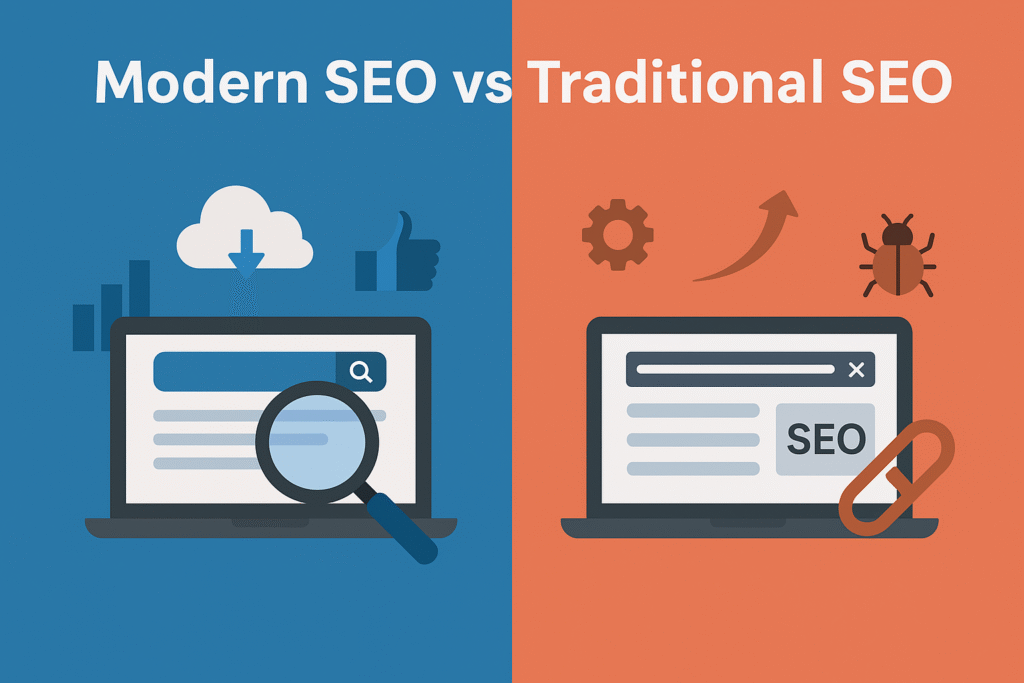
Search Engine Optimization (SEO) has drastically evolved over the years. While traditional SEO focused primarily on keywords and backlinks, modern SEO is a more holistic approach that considers user experience, content quality, and search intent. In this article, we’ll break down the key differences between old-school and modern SEO so you can optimize your website effectively in 2025.
What is Traditional SEO?
Traditional SEO, often called “old-school SEO,” refers to techniques that were popular a decade ago. The primary focus was on:
- Keyword Stuffing: Overloading content with target keywords.
- Exact Match Domains: Choosing domains that matched keywords exactly.
- Backlink Quantity: Prioritizing the number of backlinks rather than their quality.
- Meta Tags Overload: Using meta tags excessively to improve ranking.
While these strategies worked in the past, search engines have become smarter, rewarding websites that provide genuine value to users rather than just keyword-optimized content.
What is Modern SEO?
Modern SEO emphasizes user experience, high-quality content, and understanding search intent. Google’s algorithms now consider:
- Search Intent: Understanding what the user really wants.
- Content Quality: Informative, engaging, and original content.
- Mobile Optimization: Ensuring websites perform well on mobile devices.
- Page Speed and UX: Fast-loading pages and easy navigation.
- Authority and Trustworthiness: Backlinks from reputable sources.
Modern SEO isn’t just about pleasing search engines—it’s about providing value to your audience while following best SEO practices.
Key Differences Between Traditional and Modern SEO
| Aspect | Traditional SEO | Modern SEO |
|---|---|---|
| Focus | Keywords & backlinks | User experience & intent |
| Content | Short, keyword-stuffed | Informative, high-quality, engaging |
| Backlinks | Quantity over quality | Quality & relevance |
| Mobile Optimization | Not prioritized | Essential |
| Search Algorithms | Simple keyword matching | Semantic understanding & AI-driven |
Modern SEO integrates multiple strategies, including technical SEO, content marketing, and user behavior analytics, to achieve sustainable rankings.
Why You Should Transition to Modern SEO
If your website still relies on traditional SEO, it might be losing traffic and visibility. Here’s why modern SEO is crucial:
- Future-Proof Strategy – Algorithms increasingly prioritize value over manipulation.
- Better User Experience – Fast, mobile-friendly sites rank higher.
- Higher Engagement – Quality content encourages shares and repeat visits.
- Sustainable Rankings – Search engines reward websites that follow best practices.
- Competitive Advantage – Modern SEO helps you stay ahead of competitors.
FAQs About Traditional vs Modern SEO
1. Can traditional SEO still work in 2025?
While some traditional tactics may offer minor benefits, relying solely on them is risky. Modern SEO strategies yield better long-term results.
2. What is the most important factor in modern SEO?
User experience, high-quality content, and relevance to search intent are the most critical factors.
3. How do backlinks differ in modern SEO?
Modern SEO focuses on high-authority, relevant backlinks instead of just accumulating large numbers.
4. Is mobile optimization really necessary for SEO?
Absolutely. Mobile-first indexing means search engines primarily use the mobile version of your site for ranking.
5. How can I start transitioning from traditional to modern SEO?
Focus on content quality, user experience, mobile responsiveness, and authoritative backlinks while analyzing performance with tools like Google Analytics and Search Console.
Conclusion
The world of SEO has changed significantly. Moving from traditional, keyword-focused strategies to modern, user-centered techniques is no longer optional—it’s essential. By prioritizing quality content, improving user experience, and staying up-to-date with search algorithms, your website can achieve better rankings, attract more traffic, and provide real value to your audience. Transitioning to modern SEO ensures your site remains competitive and sustainable in the ever-evolving digital landscape.